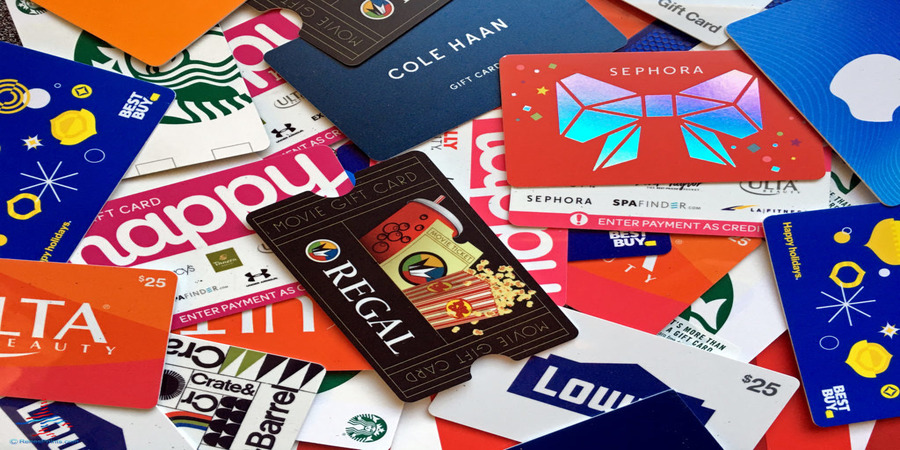
Gift cards have become one of the most popular and convenient ways to give money, whether for specific stores or online purchases. They offer flexibility for both the buyer and the recipient but may include fees, restrictions, or expiration dates that reduce their value.
Billions of dollars in unused balances go unclaimed each year, according to Bankrate. “Survey: 43% of Americans Have at Least One Unused Gift Card.”
Understanding how these cards work, the types available, and how they compare with prepaid cards can help you make the most of them and avoid common pitfalls.
How Gift Cards Work
You’ve probably bought or received one: a small piece of plastic or a digital code that promises instant choice. But few people stop to think about how gift cards actually work.
A gift card is a payment card loaded with a set amount of money. When you buy it, you are paying up front for future spending. The recipient can then use that balance to make purchases at specific stores or, depending on the type of card, anywhere major payment networks such as Visa or Mastercard are accepted.
Here’s what typically happens behind the scenes:
You purchase the card and choose the amount to load.
The card’s value is stored electronically with a retailer or payment network.
Each time it’s used, the purchase amount is deducted from the remaining balance until it hits zero.
Most physical cards can be swiped or tapped in a store, while digital ones can be entered at checkout online or scanned from a phone. In both cases, it is a direct draw from that prepaid balance rather than a credit charge or bank withdrawal.
Even though the process feels simple, a few fine-print details matter:
Expiration dates: Many cards never expire, but check the packaging or email for confirmation of this.
Fees: Some open-loop cards include small purchase or activation and inactivity fees.
Redemption limits: Some retailers restrict where and how cards can be used.
Finite spending: Unlike prepaid cards, most gift cards can only be used once and cannot be reloaded.
Understanding these details allows for a smooth purchase process versus a frustrating decline message at checkout.
Types of Gift Cards
Not all gift cards work the same way. Knowing the differences can help you choose the right kind for your situation.
Closed-Loop Gift Cards
These are the most common. They can be used only at one retailer or within a specific brand’s network. For example, a Starbucks card works at Starbucks, not Dunkin’. A Target gift card can only be spent at Target stores or online. They’re a great fit when you know the recipient’s favorite place to shop or dine.
Open-Loop Gift Cards
Open-loop cards are backed by payment networks such as Visa, Mastercard, or American Express. They can be used wherever those cards are accepted and feel more like prepaid cash. The only caveat is that sometimes they include activation or service fees. But, because they aren’t tied to a single retailer, they’re popular for general gifts or bonuses.
Physical Gift Cards
These are the traditional plastic or metal cards you can hold. They work in-store and online, and they make gifting feel tangible. The downside is simple but crucial: lose the card, lose the money. That said, some retailers can replace them if you keep the purchase receipt.
Digital Gift Cards
Digital cards arrive by email or text and can be stored in a phone app or digital wallet. They’re ideal for last-minute or long-distance gifts. Because there’s no physical card to misplace, they’re easier to manage and better for the environment. Just remember to keep track of the email or digital code so it doesn’t get buried in your inbox or accidentally deleted.
